
Does Ballet Improve Posture and Confidence in Kids?
May 22, 2026
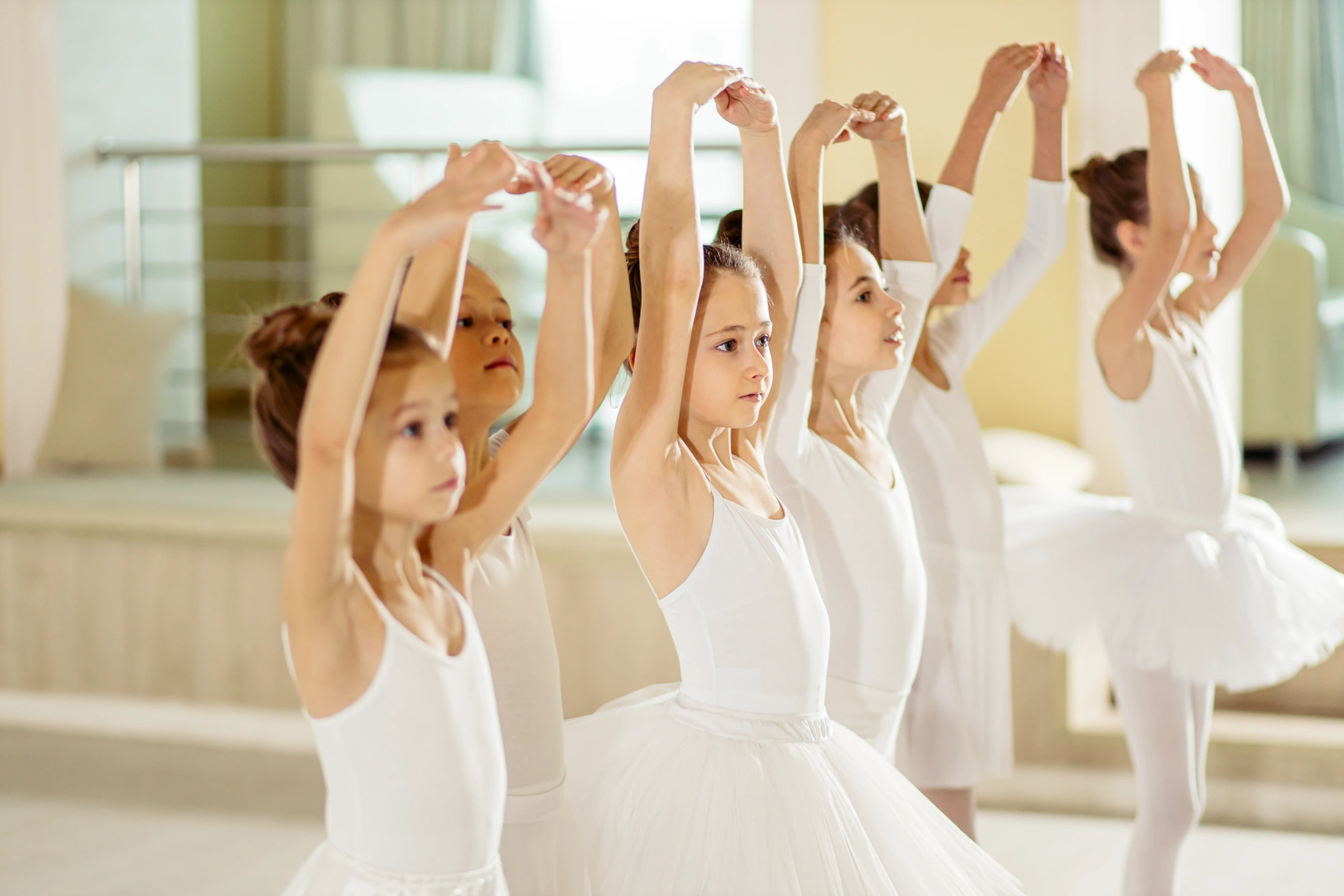
Children in a ballet dance school in Singapore practising arm positions in class, illustrating how ballet supports posture, coordination, and confidence.
Summary:
- Holistic Growth & Life Skills: Ballet training supports more than technique, helping children build self-discipline, focus, and a strong sense of belonging.
- Natural Posture & Poise: Through consistent practice, children develop strong posture and natural grace that carries into everyday life.
- Confidence Through Progress: Structured lessons create a safe space where small achievements are recognised, helping children grow in confidence.
- Resilience & Positive Mindset: Children learn to embrace corrections as guidance, building resilience and a positive approach to challenges.
If your child has been attending a ballet dance school in Singapore for a few months, you have probably noticed something. They stand a little taller. They carry themselves with more poise. And there is often a quiet self-assurance showing up in everyday moments.
These changes are not coincidence. Ballet classes support both posture and confidence, though it happens gradually. Each small step forward — a steadier balance, a more relaxed shoulder — adds up over time. Through gentle repetition and a nurturing class environment, children develop physical awareness and inner strength at their own pace.
How Ballet Can Support Posture Development
Good posture is not built through a single reminder. It develops gradually through repetition, body awareness, and strength in the right places.
Alignment Training Through Simple, Repeatable Cues
Children do not learn good posture from being told once. They learn it from hearing the same gentle reminders, practices, class after class, until their body starts to respond naturally.
Ballet teachers use simple cues that even young children can follow. “Stand tall”. “Relax your shoulders”. “Soften your knees”. These prompts come up in nearly every lesson. Over time, the child stops needing the reminder. Their body remembers on its own. That shift — from conscious effort to natural habit — is where real postural change begins.
Core Engagement and Pelvic Control
When a child practises relevé — rising gently onto the balls of their feet — the abdominal and pelvic muscles engage naturally. Over weeks and months, those muscles grow stronger. Because the core supports the spine, this added strength makes it easier for children to sit and stand well, not through effort, but because their body can hold itself comfortably.
Strength and Flexibility in the Right Balance
Healthy posture is not just about strength. Tight hip flexors or stiff shoulders can pull the body out of alignment just as easily as weak muscles.
Each ballet class combines muscular work — holding positions, travelling sequences, and jumps — with gentle stretching. The posture children develop tends to look and feel natural. Not stiff or forced, but balanced and easy. It is the kind of posture that follows them out of the studio and into everyday life.
What Age Can Children Start Ballet?
Children can start ballet as young as 3 years old. At this age, classes are not about technique. They are about discovery.
Entry-level programmes for toddlers and pre-schoolers are designed around imaginative play, storytelling, and music. A 3-year-old is not learning a tendu — they are tiptoeing through an enchanted forest or twirling like a snowflake. Movement becomes a world they want to explore, not a skill they are being drilled on.
This foundation matters more than it might seem. Children who begin through play develop body awareness, listening skills, and a love of movement early. By the time they transition into more structured classical training around age 5, they already feel at home in the studio.
There is no single “right” age to start. But starting young — in a programme built for young children — gives them more time to grow at their own pace, without pressure.
What Confidence Looks Like in Dance and in Real Life
Confidence does not always look loud or obvious in children. Sometimes it appears in small decisions, like trying something new, staying involved, or accepting help without feeling defeated.
Confidence Is Behavioural, Not Personality
Many parents wonder whether their child is “naturally confident” or not. But confidence is less about personality and more about what children feel comfortable doing. It grows through experience, and every child can develop it.
In the studio, confidence often shows up in quiet but meaningful ways. It might look like a child trying a new step even when they feel unsure. It might be hearing a teacher say, “Try lifting your chin a little,” and making the adjustment without feeling discouraged. It can also be joining in with the group without needing constant reassurance.
These are learned behaviours. They are not fixed traits. They develop with encouragement, and ballet gives children a supportive space to build them week by week.
Every child’s confidence starts somewhere. A structured ballet class gives them a safe, encouraging space to find theirs — one small step at a time. Sign up for a trial class and see what feels right for your child.
How Ballet Builds Confidence Step by Step
It grows through routine, progress, guidance, and connection with others. These steady experiences help children feel more capable, secure, and willing to take part.
Routine Helps Kids Feel Safe and Know What to Expect
Ballet classes follow a familiar structure. Warm-up at the barre, centre work, travelling steps, cool-down. This routine stays largely the same each week, even as the content becomes more challenging.
For children, this predictability is deeply reassuring. When your child walks into class knowing what to expect, they can relax and focus on learning rather than feeling anxious. The studio becomes a place they trust. This is especially helpful for those who take a little longer to warm up to new environments.
“Small Wins” Each Week: Progress Children Can Feel
In ballet, progress often comes in small, satisfying steps. Holding a balance for 2 seconds longer. Remembering a combination without help. Pointing their toes just that bit more neatly.
These moments matter. They give your child real, physical proof that their effort is paying off. That feeling of “I could not do this last week, and now I can” is one of the most encouraging things a child can experience. It builds a belief in themselves that carries well beyond the classroom.
Learning to Take Feedback Without Losing Confidence
Gentle corrections are part of every class, for every dancer at every level. Learning to receive feedback and keep going is a wonderful skill for children to develop.
Some children find corrections tricky at first. But in a supportive class where every child receives the same kind guidance, something gradually shifts. Corrections feel less like criticism and more like encouragement. Your child begins to understand that “try this differently” does not mean “you are not good enough”. It means someone is paying attention — and believes they can do even better.
Making Friends in Class and Feeling Part of a Team
Ballet might look like a solo art form, but children rarely dance alone. They learn in groups, practise alongside friends, and often prepare for performances together. Over time, their class becomes a little community — with familiar faces, shared routines, and plenty of laughter along the way.
That sense of belonging is quietly powerful. A child who feels uncertain in other settings might discover that here, they have a place. People are happy to see them each week. Friendships form. Belonging grows. That connection can make a real difference to how your child sees themselves.
Conclusion
If this sounds like the kind of environment that could benefit your child, Crestar School of Dance offers ballet classes designed to support young learners. Each class is delivered in a structured, encouraging setting that helps children grow with confidence.
The right environment shapes not just how a child dances, but how they carry themselves through life. Register for a trial ballet class at Crestar School of Dance in Singapore to see if it feels like the right fit for your child.

 © Crestar School of Dance |