
Our Signature
DANCE PROGRAMMES
K-pop Dance Classes in Singapore
Ages 4 years & above
If your child already knows the choreography before the music video ends, they are ready for a K-pop dance class in Singapore. At Crestar School of Dance, children learn the actual routines behind popular K-pop hits, picking up real technique, sharp timing, and performance skills along the way.
The programme teaches dance techniques drawn from Hip Hop and Jazz, the foundations that sit underneath K-pop choreography. Classes are built around creativity, teamwork, and self-expression, so your child dances alongside others who share the same passion for K-pop.
What is K-pop?
K-pop, short for Korean pop, is a genre of popular music from South Korea. What sets it apart is its blend of catchy melodies, sharp choreography, and polished visuals. It pulls from pop, hip hop and R&B to create a sound that feels both familiar and fresh.
Despite most songs being in Korean, fans worldwide connect with the artistry. The choreography is a huge part of that. K-pop routines are designed to be tight, synchronised, and visually striking, which is why they translate so well into a structured dance class. For children, it is music they already love paired with movement that challenges them physically and creatively.
In Singapore, K-pop dance classes are available for different age groups, including adults, making it easier for anyone interested in the genre to learn the moves in a guided setting.
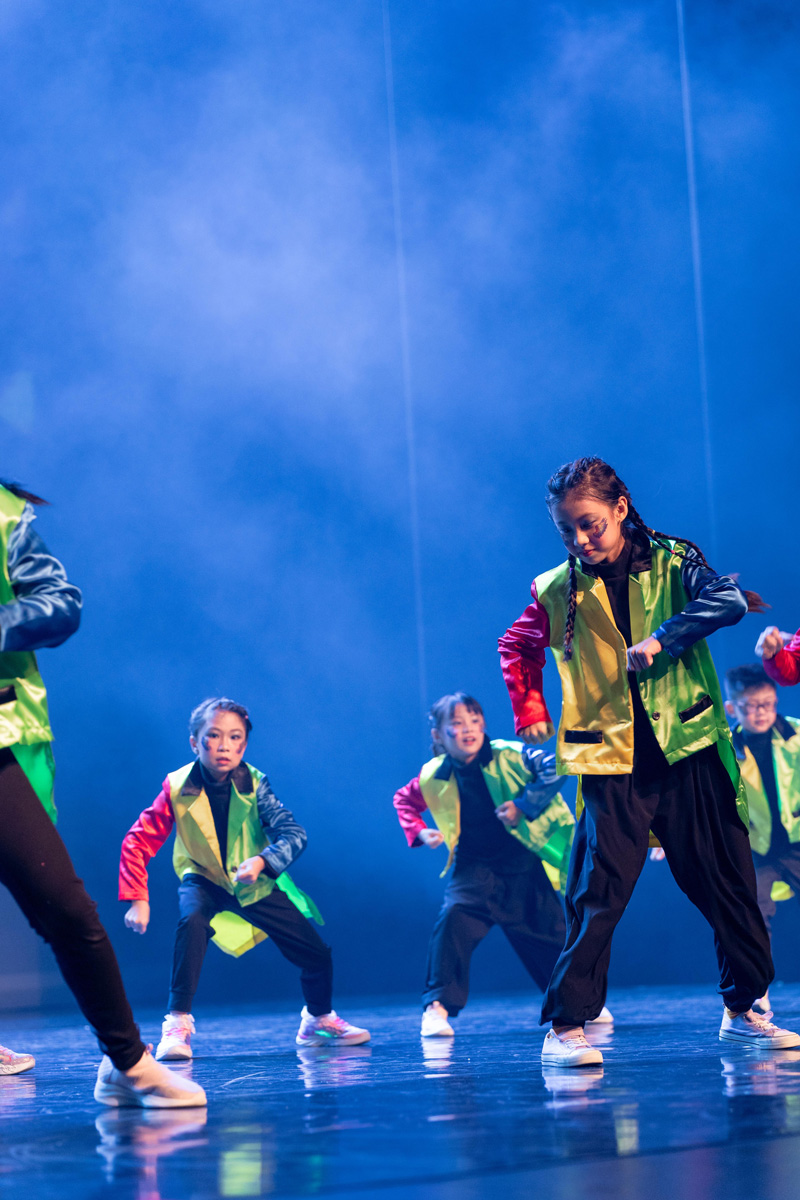
Overview of the Popularity of K-pop
K-pop has gone from a niche South Korean export to one of the most popular music genres in the world. A recent report from South Korea’s Ministry of Culture found that K-pop accounts for the largest share of global media coverage of Korean cultural content, including 24.5% in Europe and 32.3% in North America. The music is catchy, the choreography is sharp, and the production quality is hard to ignore. Children who discover it tend to stay hooked.
It is not only children and teenagers who are drawn to it, either. Many adults now join K-pop dance classes to learn the choreography, keep active, and enjoy the music in a more social setting.
The Rise of K-pop Dance Classes Globally
Dedicated K-pop dance classes were far less common outside South Korea even a decade ago. Now they run in cities across the world. The shift came through platforms like YouTube, TikTok, and Instagram, which turned K-pop choreography into something anyone could try. Viral dance challenges made learning the moves a shared activity rather than a solo hobby.
How is the K-pop Dance Culture in Singapore?
Singapore is one of the many countries where K-pop dance culture has flourished, with a growing number of dance studios and schools offering specialised classes. The city’s vibrant fanbase actively participates in dance covers, competitions, and social media challenges, showcasing their passion. Youth spaces like *SCAPE near Orchard Road regularly host K-pop dance-offs and choreography events, giving young dancers a stage outside the studio to perform on.
Types of K-pop Dance Classes
K-pop dance classes for kids are a fun way to build coordination, fitness, and confidence at the same time. Whether they enjoy the genre or simply love moving around, the right class can help them learn routines, follow rhythm, and express themselves through movement.
Beginner
For children new to K-pop. They pick up rhythm, coordination, and simple K-pop choreography. The focus is on getting comfortable with movement, learning to follow counts, and building confidence in a group. Our K-pop dance class for beginners in Singapore is a low-pressure way to start, no prior experience needed.
Intermediate
For children who have the fundamentals down. Routines get more complex, transitions are sharper, and group synchronisation becomes a bigger part of each class. Timing, musicality, and expression get more attention at this level.
Advanced
For children who want to be pushed. Routines are faster, formations are tighter, and the choreography is more demanding. This level suits children preparing for performances or competitions.
K-pop Dance Programmes & Packages
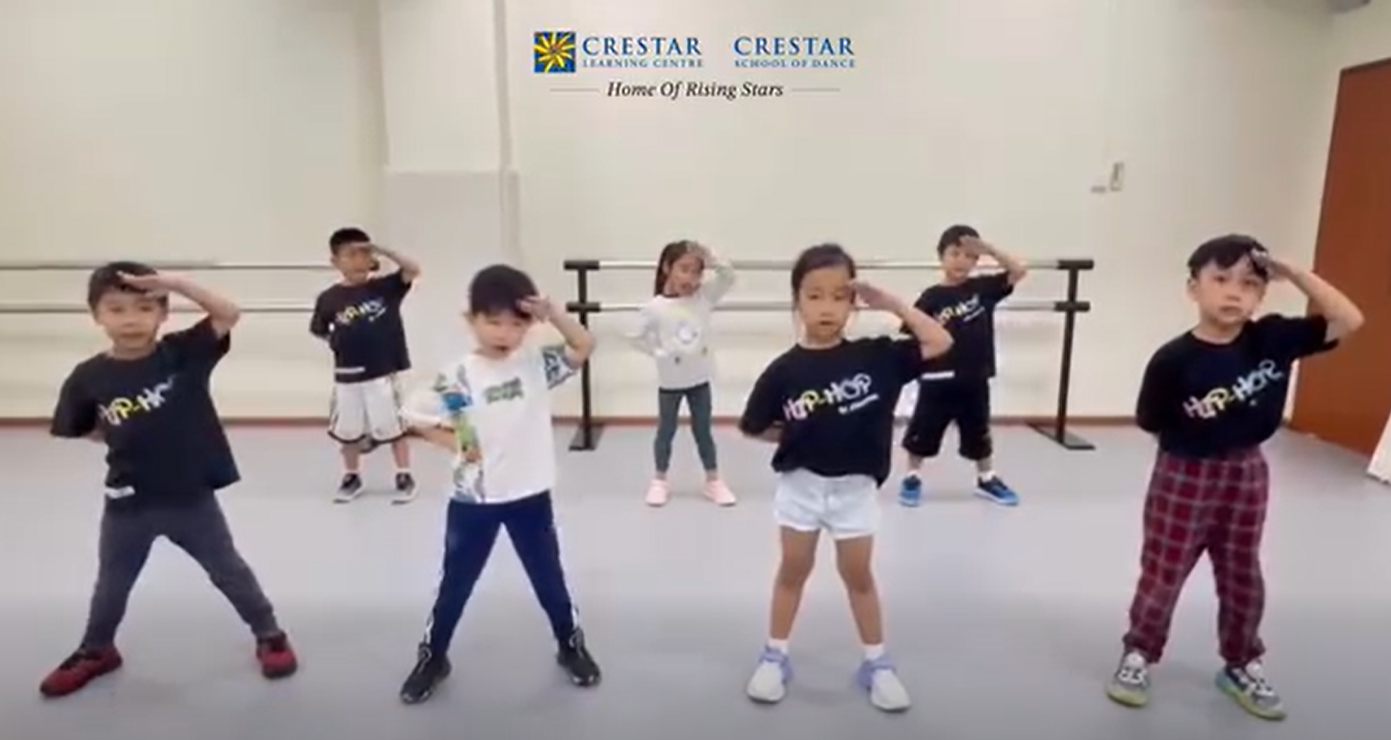
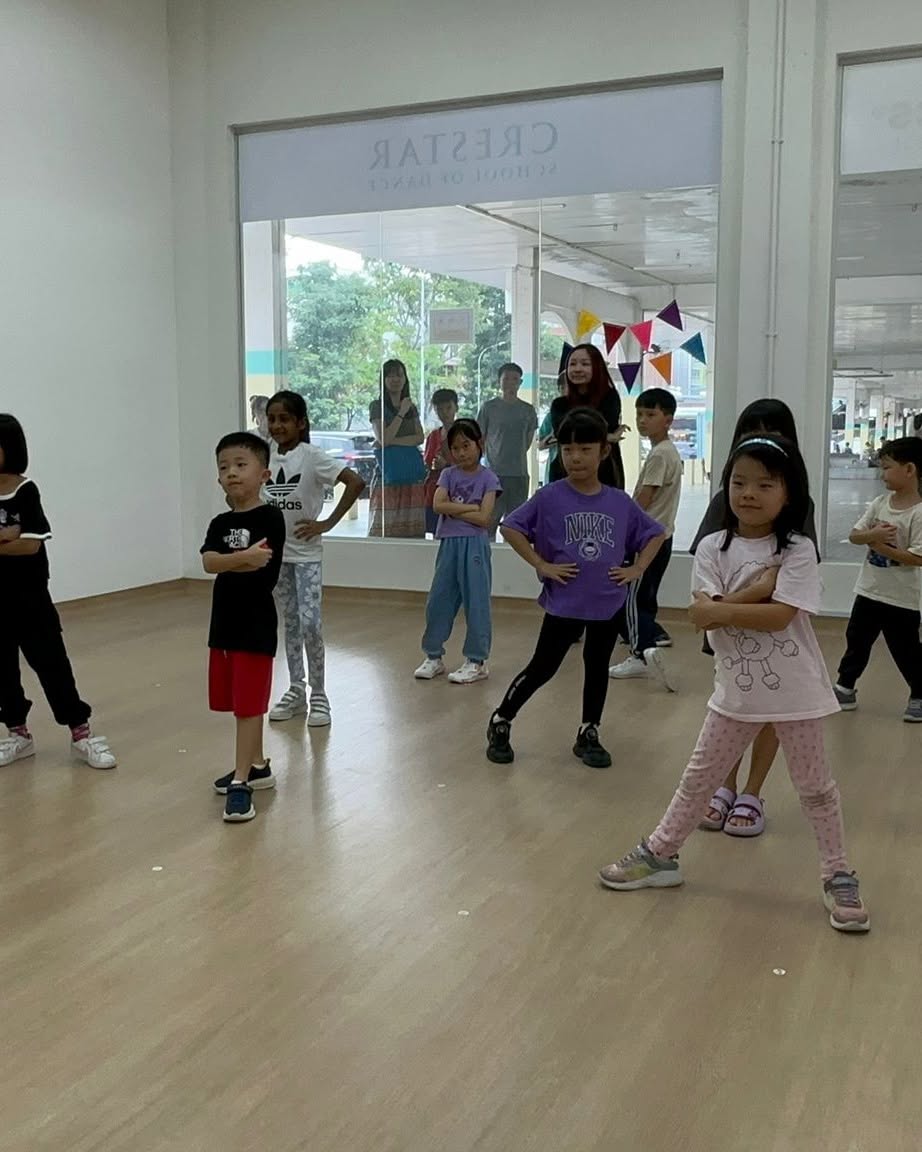
Looking for a K-pop dance class in Singapore? Our classes at Crestar School of Dance run on a term basis, so your child progresses week to week rather than starting fresh each time. Classes are open from age 5, and your child can join at any point in the year by booking a trial first.
Beyond weekly classes, Crestar had run a K-Culture and Dance Immersion Programme in Seoul, where students trained with Korean K-pop instructors and danced alongside Korean students. The school is looking to offer more overseas immersion opportunities in the future.
Students also get the chance to perform through Crestar’s concerts and competitions.
For full details on what each term includes, class schedules, and fees, contact your nearest centre.
Why Join a K-pop Dance Class?
Whether your child is a K-pop enthusiast or simply loves to dance, joining a K-pop dance class gives children a structured way to build coordination, confidence, and fitness through music they already love.
Fitness and Health Benefits
K-pop isn’t just about fun choreography; it’s also a great workout. Dancing to K-pop routines can help improve cardiovascular health, flexibility, and coordination without being boring. It engages various muscle groups, promoting overall fitness while keeping your child active and healthy in an exciting, dynamic way.
Learning Popular Choreography
Most children come in already knowing the songs and often the moves they want to learn. Classes work with that. Your child picks up the actual choreography behind popular K-pop hits, broken down step by step, along with the technique. By the end of a term, they can perform a routine cleanly rather than half-remembering bits of it.
Fun and Stress Relief
School days can feel busy and tiring, and children often bring that stress home with them. A K-pop dance class gives them an hour to let off steam to music they actually enjoy, with friends, and away from a screen. Most children leave feeling lighter than when they arrived, and over a term, that can make a difference at home too.
Boost Confidence
If your child struggles with self-confidence, a K-pop dance class can be a great way to boost it. Learning and performing dynamic routines in a supportive environment with peers can help them gain confidence in their abilities, both on and off the stage.
Meet Like-Minded People
A lot of K-pop enthusiasts share a deep passion for the music and culture, making K-pop dance classes a great way for your child to interact with other kids with similar interests. These classes foster friendships, teamwork, and a sense of community with fellow dancers who share similar interests.
What to Expect in a K-pop Dance Class
Every class follows a similar shape, so your child knows what is coming and settles in quickly. Here is what a typical session looks like from start to finish.
Warm Up and Stretching
The first 10 minutes are spent getting the body moving. Light cardio gets the heart rate up, and stretching loosens the muscles your child will be using in the routine. It is also a chance to shake off the school day. By the time the music starts, they are warm, ready, and switched into class mode.
Learning Choreography
This is where most of the class time goes. The teacher breaks the routine into smaller sections and walks students through each one slowly, layering in counts and transitions as the section becomes familiar. Music tempo is built up gradually, so your child has time to absorb the moves before dancing them at full speed.
Practice and Rehearsal
Once a section is learned, students run it together with the music. This is where group timing, formation, and expression come together. The teacher gives feedback, students refine, and the routine starts to feel like a real performance rather than a series of steps. It is also where most of the energy in the room shows up.
Cool Down
The last few minutes are calmer. Slower movement and stretches help the muscles recover, and the teacher recaps what was covered. It is a settled finish to an active hour, and a chance to flag anything to work on before next week. Your child leaves a bit tired, usually in a good mood.
Frequently Asked Questions
Find out more about dance here.

 © Crestar School of Dance |