
Is Your Child Ready to Start Hip Hop Dance for Kids?
November 20, 2026
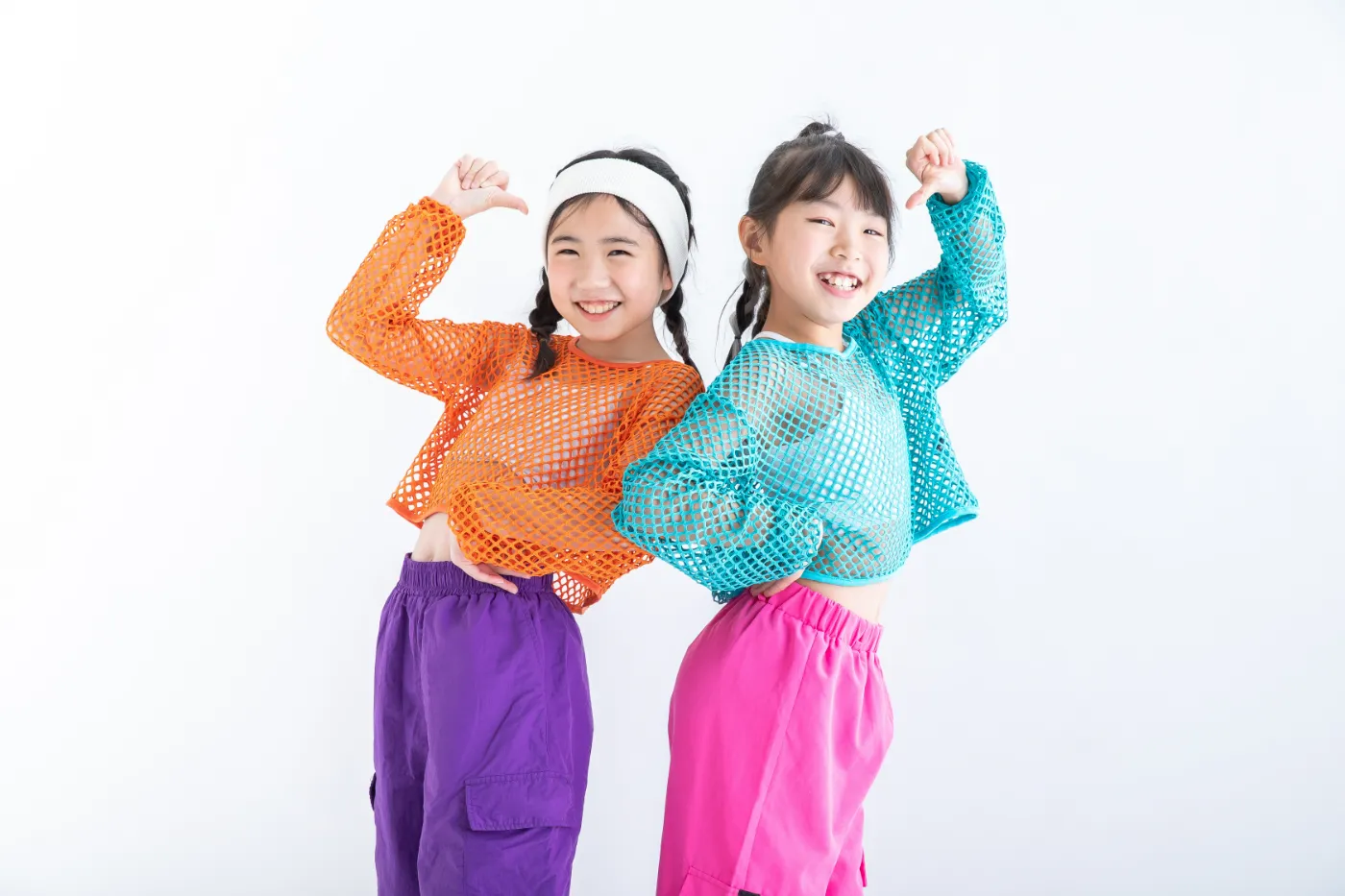
Two young girls strike a confident, energetic pose back-to-back during a beginner hip hop dance class.
Summary:
- Most children are ready for structured Hip Hop classes from age 4, when coordination and attention span develop enough for beginner-level work.
- Age is not the only factor: genuine curiosity and willingness to join a group matter just as much.
- Not all classes are equal. Look for narrow age bands, separated experience levels, and a clear progression pathway before you enrol.
Some children do not need convincing. Your child has been dancing around the living room for months, showing a real passion for dance. They watch videos, copy moves, and ask you almost weekly when they can go to a proper class. The question is no longer whether they are interested. It is whether they are ready, and whether the right class is actually out there for them.
Readiness leaves clear signals. Research in early childhood development suggests that most children begin to show the coordination and focus needed for structured movement from around age 4. This guide walks through the practical signs to look for, what Hip Hop dance for kids involves, and how to find the right environment for your child.
What Age Do Most Kids Start Hip Hop Dance?
Most children are ready for structured movement classes, including Hip Hop, from around age 4. At this stage, a child can follow sequential instructions, hold a short routine in memory, and coordinate movement to a beat.
However, age is a starting point, not a guarantee. A 5-year-old who loves music and can follow a simple instruction is often better placed than a reluctant 7-year-old being nudged into class. Temperament and genuine interest count for just as much as age.
The table below draws on CDC developmental milestones and gives a broad picture of how readiness typically develops.
| Age Range | Typical Developmental Stage | Dance Readiness |
|---|---|---|
| 18 months to 2 years | Early rhythm response, begins imitating movement | Play-based movement |
| 3 to 4 years | Growing body awareness, follows simple 2- to 3- step instructions | Structured early movement programmes |
| 4 to 6 years | Coordination developing, able to follow short sequences and hop on one foot | Beginner hip hop classes |
| 7 years and above | Greater physical control and sustained attention | Progressing to more technical content |
Rows 1 to 3 draw on CDC developmental milestones. Row 4 reflects general school-age development patterns. Every child develops at their own pace.
Is Age 4 the Right Time to Start Hip Hop Classes?
At 4, most children can follow a short sequence of movements, remember it, and repeat it. Coordination improves noticeably. Attention spans lengthen enough to handle a structured class.
At the beginner level, preschool hip hop classes in Singapore focus on exactly what a 4-year-old is ready to explore:
- Basic footwork and weight shifts
- Simple body isolations, such as moving the head, shoulders, and chest independently
- Matching movement to a consistent beat
- Short movement phrases that build into a routine over several weeks.
The right question is not only whether your child is old enough, but whether the class is structured for their age group. A beginner class for 4-year-olds looks and feels very different from one designed for 10-year-olds.
If a studio cannot explain how its classes are grouped by age and experience, that is worth clarifying before you enrol.
A trial class at Crestar School of Dance lets an experienced teacher see where your child is, so you can make a confident decision before the term begins. Enquire about a trial class.
How Do You Know When Your Child Is Ready to Dance?
Readiness shows itself in everyday behaviour. The signs are usually straightforward if you know what to look for.
Physical indicators worth noting include:
- A natural enjoyment of movement, even unstructured dancing at home
- The ability to follow a 2- or 3-step instruction without prompting
- Reasonable balance when moving across a room
- Basic spatial awareness when moving around other people.
None of these needs to be perfect. Kids come to Hip Hop dance classes for help in developing these skills, not to demonstrate that they already have them.
Emotional readiness matters just as much. A child who is curious about music and willing to try new things in a group is well-placed to settle into class. A child who becomes easily frustrated or who needs close individual support may benefit from more time in a play-based movement setting first.
The Signs of Readiness You Can Spot at Home
A few weeks of observation at home can give you a useful picture of where your child is. You are not looking for impressive movement, just consistent, natural engagement.
The table below outlines common home behaviours and what they suggest about dance readiness:
| Behaviour at Home | What It Indicates |
|---|---|
| Spontaneously moves to music | Natural rhythm response and physical enjoyment |
| Copies dance moves from videos or TV | Strong observational learning and motivation |
| Enjoys clapping or stomping games | Developing beat awareness and coordination |
| Follows along in group games at school | Able to read and respond to group instructions |
| Tries again after getting something wrong | Resilience for structured learning |
Coordination does not need to be advanced before a child starts. Beginner dance classes for kids are designed to build it. What you are looking for is engagement and willingness, not technical ability.
Why Class Structure Matters More Than You Might Think
Not all children’s dance classes are structured the same way. A class that mixes 5-year-olds with 9-year-olds, or beginners with children who have trained for years, creates an environment where younger children can feel consistently behind.
| Factor | What to Look For | Red Flag |
|---|---|---|
| Age grouping | Narrow age bands (e.g., 4 to 6) | Wide ranges spanning multiple developmental stages |
| Experience level | Beginner, intermediate, and advanced separated | All abilities mixed in one class |
| Progression | Clear steps from one level to the next | No visible pathway or milestones |
Crestar groups its hip hop classes by age and experience, so your child works alongside peers at the same stage to master street dance techniques. If you are unsure how a studio divides its classes, ask before you book.
What Beginner Hip Hop for Children Actually Looks Like
Beginner Hip Hop focuses on core movement skills. Routines are short, repetition is deliberate, and teachers introduce new material gradually so children have time to absorb it.
| Skill | What It Involves | Why It Matters |
|---|---|---|
| Footwork | Basic step patterns, weight shifts, and timing | Builds rhythmic foundation and spatial awareness |
| Body isolations | Moving individual parts (head, chest, shoulders) | Develops physical control and coordination |
| Gliding | Smooth travelling movements across the floor | Introduces style and fluidity |
| Popping | Controlled muscle contractions to the beat | Builds body awareness and musical timing |
| Locking | Freezing movement at specific moments | Reinforces listening and beat-matching |
Techniques such as gliding, popping, and locking are introduced step by step. Each class builds on the previous one. A child who leaves the first session wanting to come back is a strong sign that the environment is right for them.
Building Confidence Through Dance, One Lesson at a Time
The benefits of Hip Hop classes extend well beyond learning to dance. Performing a short routine, responding to music, and moving in front of others builds confidence, resilience, and social skills that carry into school and daily life.
Hip Hop, in particular, gives children room to bring their own personality to what they are learning. For children who are quieter or less confident in other settings, that space can make a real difference in developing listening and teamwork skills.
Start Your Child’s Hip Hop Journey at Crestar School of Dance
If your child is showing signs of readiness, or you simply want to find out whether Hip Hop is the right fit, a trial class is the lowest-pressure way to begin.
At Crestar School of Dance, we offer Hip Hop dance for kids aged 4 onwards across multiple locations in Singapore, including Hougang/Crestar@Kovarts, Jurong East, Marine Parade, and Woodlands.
Enrolling for trial dance classes in Singapore gives your child the chance to hear the music, meet the teacher, and move in the space with no obligation. Register for a trial class and let them take their first steps in Hip Hop at a pace that feels right for them.
 Your Checklist for Choosing a Ballet Academy in Singapore

 © Crestar School of Dance |